
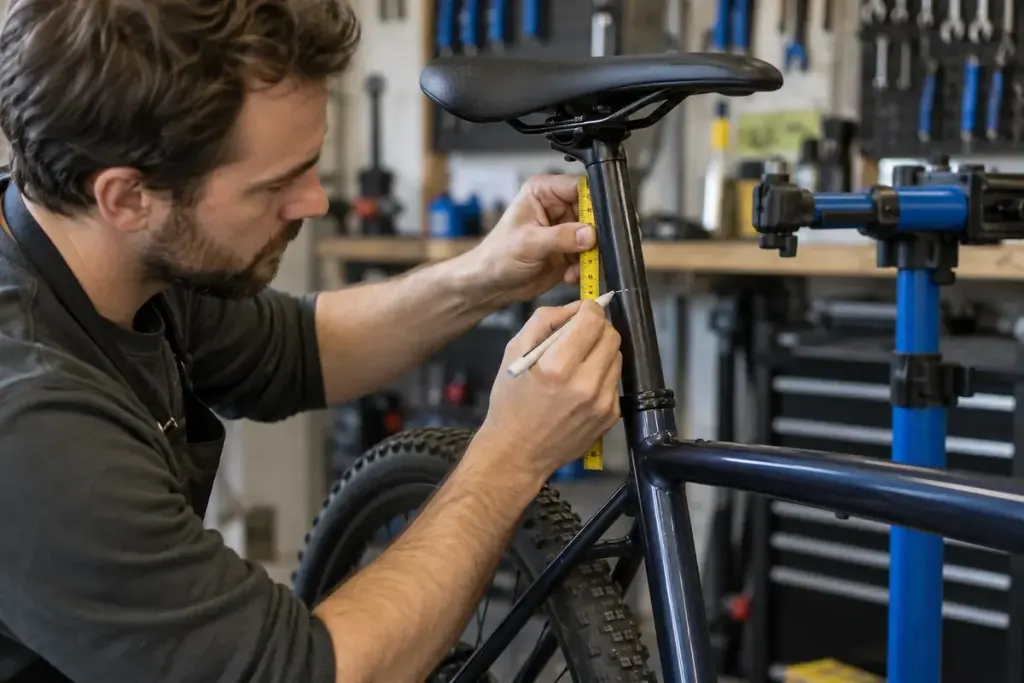
A small saddle adjustment is easy to make and surprisingly difficult to undo by memory. Before loosening anything, create a record of the current position so you have a dependable reference if the experiment does not help.
This is a recording routine, not a universal fitting prescription. Rider needs, frame design and component limits vary. Pain or persistent discomfort deserves appropriate professional assessment rather than repeated large changes made at random.
Choose repeatable reference points
Take clear photographs from the side and behind while the bicycle is stable. Record saddle height using consistent points, the fore-aft position within the rail markings and the saddle’s tilt using a repeatable method. Note the saddle model too: a measurement taken to a different shape may not mean the same thing.
Use removable marks only where the component maker permits them. Do not scratch a seatpost or rail to create a permanent line. Keep minimum-insertion and clamping-limit markings visible.
Change one variable with the right tools
Follow the component instructions for adjustment and tightening, including any specified torque. If you lack the correct tool or are unsure about the clamp, ask a competent mechanic. A recorded position is no substitute for secure assembly.
Make a modest change to one variable, then assess it in a suitable controlled ride. Record what changed and what you noticed. Changing height, tilt and fore-aft position together makes it harder to identify the cause of an improvement or a new problem.
If the saddle moves, creaks unexpectedly or does not remain secure, stop and have the assembly checked. Do not continue tightening beyond the manufacturer’s limit.
The most useful note is specific enough for another person to understand: starting measurements, the single adjustment and the result. That turns a vague sequence of tweaks into a conversation a fitter or mechanic can use.