
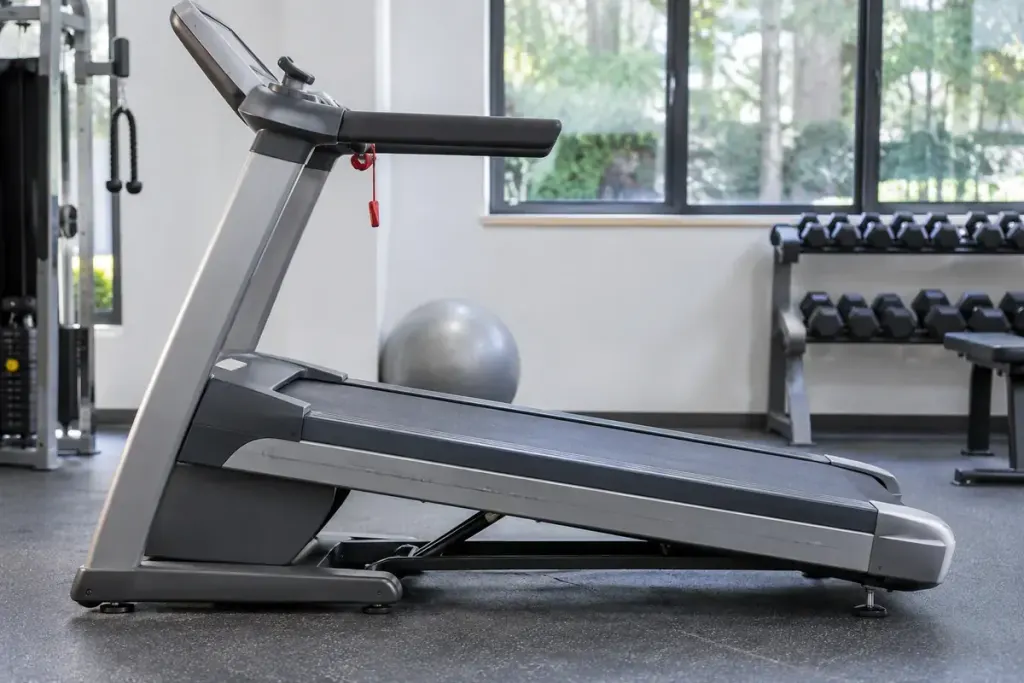
Set a treadmill to ten and the deck may feel steep enough to make the number memorable. But ten what? On many machines, incline is displayed as a percentage gradient. Reading it as an angle in degrees changes the meaning considerably.
Horizon Fitness explains incline percentage as vertical rise divided by horizontal distance, multiplied by one hundred. A 10% gradient represents ten units of rise for every hundred horizontal units. It is an angle of about 5.7 degrees, not ten degrees.
Keep the three measurements apart
A training record can include speed, duration and gradient. Each contributes different information. “Ten minutes at 5%” leaves out the speed; “five kilometres per hour” leaves out whether the deck was flat or raised. A machine’s workout level may also be a programme setting rather than an incline percentage, so check the console instructions.
For a simple illustrative entry, write “walking, 5 km/h, 4% incline, eight minutes, comfortable breathing.” That describes the actual task and how it felt. It is more informative than calling the session “level four hills.”
A road comparison still needs context
Matching a treadmill gradient to a mapped hill does not reproduce wind, footing, turns or the descent afterwards. Nor should a calculated rise be mistaken for a measurement from a real route. Keep estimated elevation and outdoor recorded elevation clearly labelled if both appear in your training log.
To learn the setting, start with a manageable speed and small incline adjustment. Follow the machine’s safety instructions and remain able to control your position on the belt. If you must hang from the handrails to maintain the chosen setting, review the workload rather than treating the display as the goal.
Changing speed and slope at the same time makes it harder to identify which adjustment affected your effort. Try one change, observe the response and record it. The number becomes useful when it helps you repeat or modify a session sensibly, rather than when it simply looks impressive on the console.