
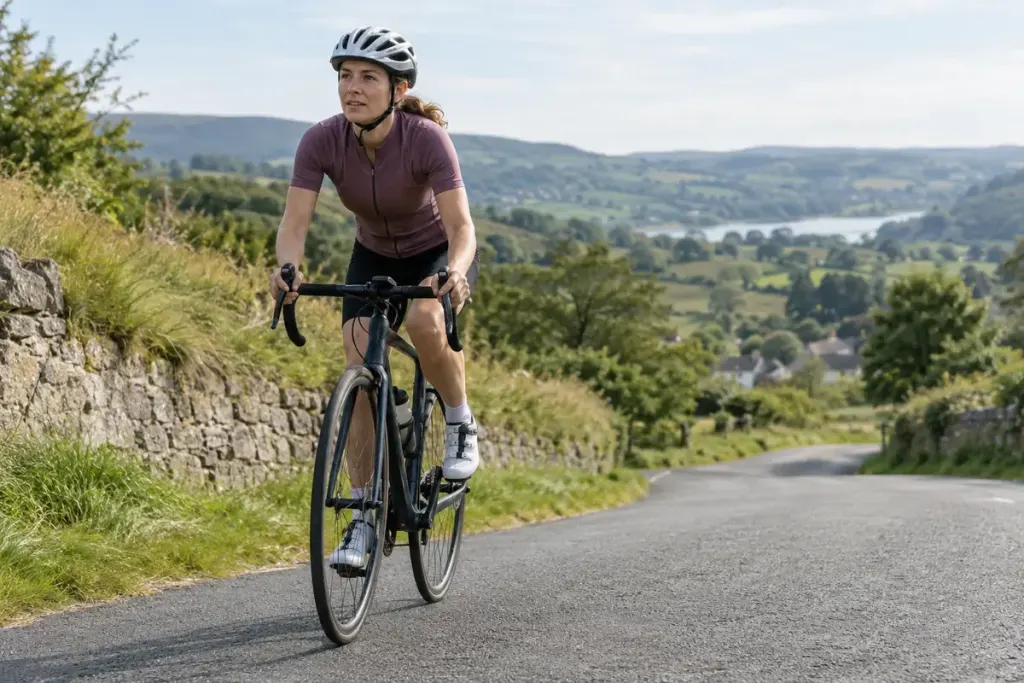
The road tilts upward, the pedals slow and you suddenly need a much easier gear. Waiting until every turn is a struggle can make the change feel awkward. Reading the slope early gives you more time to select a manageable gear and keep control.
Practise on a quiet, suitable route within your ability. Traffic awareness, braking and a safe line matter more than completing a gear-changing experiment.
Learn which control makes pedalling easier
Gear layouts differ, especially between derailleur systems, hub gears and electronically controlled setups. Read the bike’s instructions or ask a competent mechanic or instructor to explain the controls.
For a derailleur bike, shifting while pedalling with an appropriate lightened load is different from forcing a change under a very heavy load. Follow the equipment guidance. Do not assume advice for one system applies unchanged to another.
Notice the slope before your cadence collapses
Look ahead and make a modest change while the pedals are still turning comfortably. Assess the result before changing again. There is no single cadence number in this exercise that every rider must chase.
On an illustrative gentle hill, you might shift earlier than usual and observe whether the transition feels smoother. Keep effort and route conditions manageable so the observation is about timing, not an all-out climbing attempt.
If the hill exceeds your ability or a safe route is unavailable, dismount safely and walk where permitted. Struggling to stay upright in traffic is not useful practice.
Separate technique from a mechanical fault
Persistent skipping, delayed shifts, unusual noise or a chain that will not stay in gear needs inspection. Do not keep compensating for a faulty drivetrain by applying more force.
After a ride, record the situation in which the problem occurred and the gear involved if you can identify it. A mechanic can use that description more readily than “the bike feels wrong.”
Good shifting becomes less dramatic when it happens before the emergency moment. The aim is a controlled transition suited to the road and rider, not a display of how hard a gear you can push.