
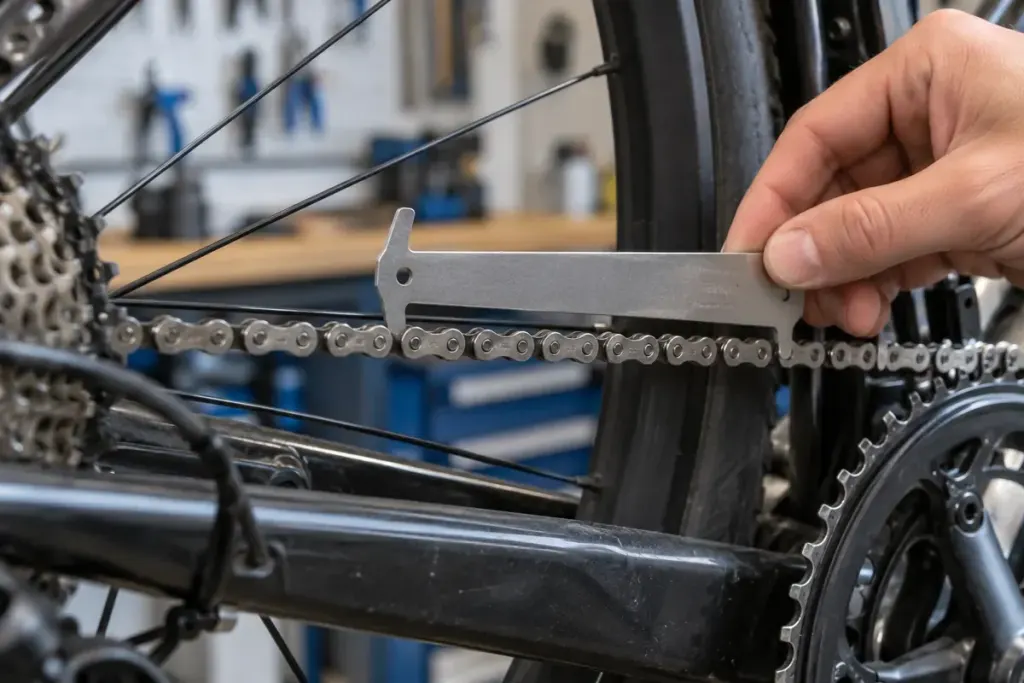
A bicycle chain can look clean and still be worn. Checking it with the appropriate tool gives you a more useful maintenance signal than judging its shine or waiting for the drivetrain to feel rough.
First identify the chain and drivetrain. Different chain designs and measuring tools have different instructions. Do not assume that a percentage printed on one gauge is the replacement limit for every bicycle in the garage.
Read the gauge’s method before using it
With the bicycle stable and the pedals stationary, place the tool on the chain as instructed. Keep fingers clear of the chainring and moving drivetrain. A drop-in gauge should be seated gently; forcing it into place defeats the measurement and can mark components.
Check more than one section of the chain and note whether the result is consistent. Heavy contamination can make positioning difficult, so clean according to the chain maker’s guidance if necessary. When a reading is borderline or inconsistent, repeat it carefully or ask a workshop to confirm it.
The Park Tool CC-3.2 instructions explain that tool’s two wear indications and direct users to the chain manufacturer for replacement guidance. Those markings are information to interpret, not universal permission to keep riding until the higher number appears.
Record a result, not just a replacement date
A simple maintenance note might say: chain model, gauge used, reading at three positions and date. Recording riding conditions alongside it can explain why two apparently similar bicycles need attention at different times. Distance alone cannot describe every chain’s service life.
If replacement is indicated, check the new chain’s compatibility and installation requirements. A new chain that skips under load needs investigation; fitting further parts by guesswork can become expensive. Wear measurement helps decide when to act, while an inspection determines which components actually need work.
After maintenance, verify the installation and shifting in a safe setting before returning to normal riding. The gauge is one part of the check, not a substitute for correct assembly.