
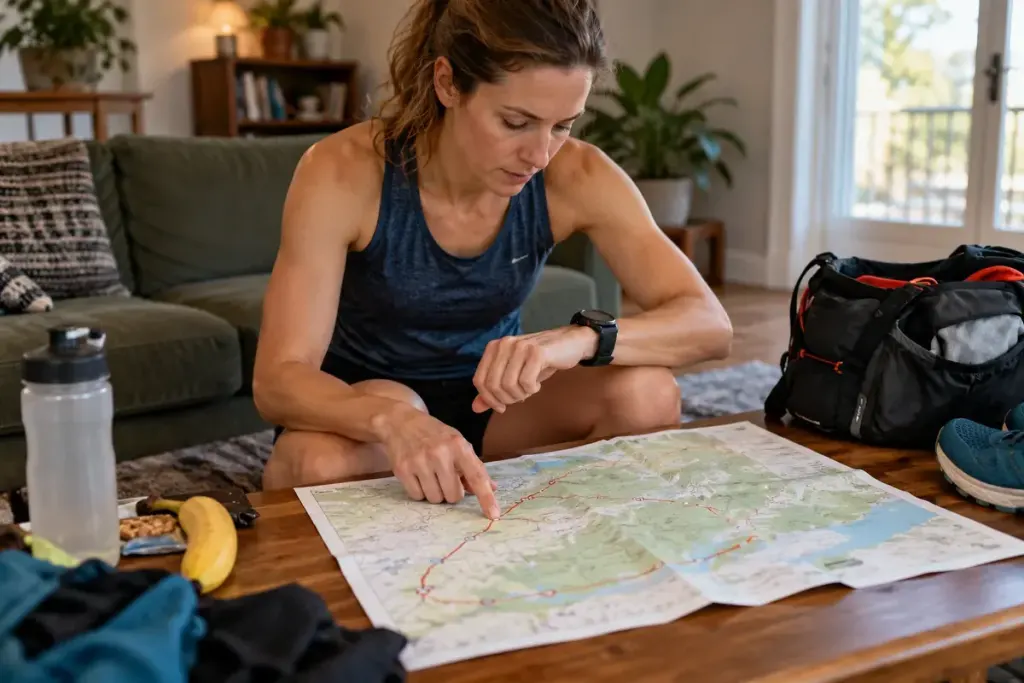
A race allows six hours, and your best training pace seems comfortably inside that limit. But the event also closes a checkpoint halfway through the course. The finish deadline is only one part of the timing problem.
Copy the rules into a small route note
Use the organiser’s current participant guide. Record each cutoff’s location, time and whether it refers to starting, arriving or leaving. Check whether timing is measured from the official start, your wave or an individual timing chip. If the wording is unclear, ask the organiser.
Do not use an old participant’s report as the final authority. Courses, start arrangements and operating permissions can change. Save the guide’s date or version so you can recognise a later update.
Count the time you will spend standing still
Build a realistic plan that includes aid stations, toilets, equipment adjustments and any planned walking. For a simple illustrative calculation, covering 12 kilometres in 120 minutes leaves no spare time within a two-hour checkpoint limit. Ten minutes spent stopped would require a different moving pace. Your actual plan should reflect the course and your preparation, not an optimistic calculation alone.
Terrain and weather can make a familiar pace inappropriate. Avoid treating the cutoff as an instruction to ignore symptoms, unsafe conditions or advice from event staff. If your preparation does not support the required schedule, consider a more suitable distance or event.
Know how to leave the course properly
Read the withdrawal procedure, transport arrangements and how to notify staff. Do not disappear from the route without following the organiser’s instructions; they may be accounting for participants still on course.
Share the practical plan with anyone meeting you, including what might happen if you stop at an earlier checkpoint. Keep their expectations separate from pressure to finish at any cost.
The useful race plan includes a comfortable route through the rules and a clear alternative if the day changes. A cutoff is an operational boundary to understand before the start, not a surprise to negotiate when you are already tired.