
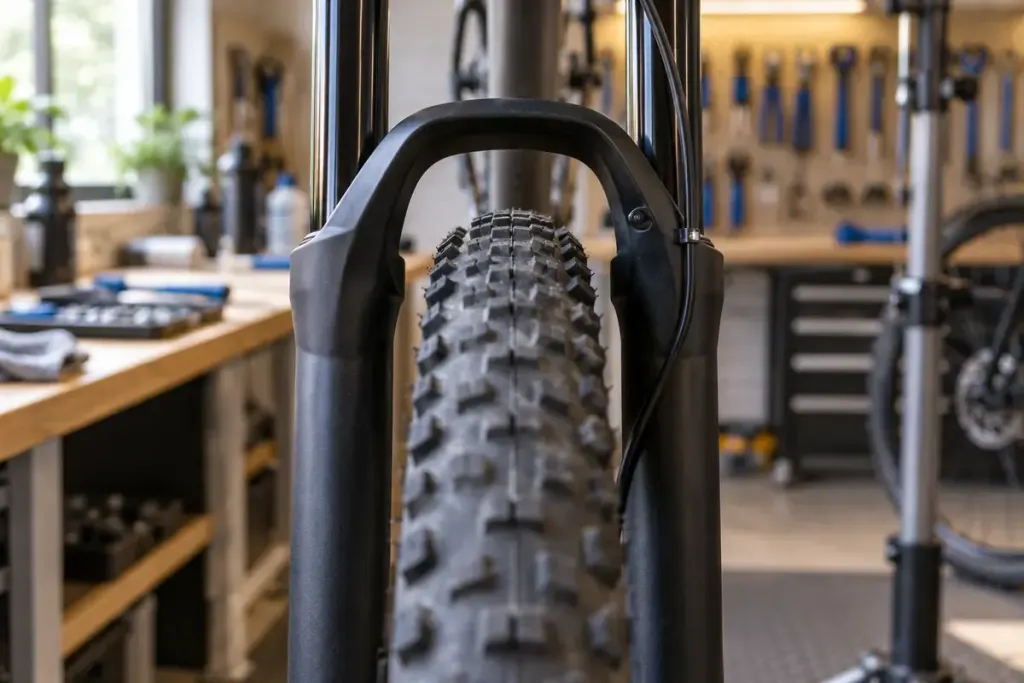
A wider tyre looks as though it will fit between the fork legs. Before ordering, follow the wheel all the way around. The tightest point may be somewhere else, and the number printed on the tyre is not a complete installation measurement.
Schwalbe’s tyre-dimension guidance explains that actual dimensions can vary with factors such as rim and pressure, and that the tyre maker cannot confirm compatibility with every bicycle frame. The bicycle and rim manufacturers’ requirements still matter.
Check the complete combination
Identify the correct wheel size and approved tyre-width range for the rim first. Then check the frame and fork limits. Include mudguards, brake components and other accessories that may occupy the space around the tyre. A combination that works without a mudguard may not work after it is reinstalled.
Do not choose a universal clearance number from an unrelated bike. Intended use, wheel movement and the manufacturer’s design requirements affect the space needed. If the documentation is unclear, ask a competent bicycle workshop to assess the proposed combination.
Inspect after fitting, not just before buying
Have the tyre installed and inflated within the limits specified for the tyre, rim and bicycle. Check the actual clearances and wheel alignment before riding. A tyre that brushes a component or has insufficient required clearance is not made acceptable by the fact that it spins on the workstand once.
Keep the original tyre’s size and the proposed replacement’s exact model in your notes. Two products with similar nominal widths can still be poor substitutes in a tight frame. Also consider whether the new tyre affects mudguard fit or the way the bike is used.
Going wider can be a reasonable equipment choice, but fit is a system question. Begin with compatibility and safe clearance, then consider the riding characteristics you want. The useful upgrade is a tyre the bicycle can properly accommodate, not the widest one that can be squeezed into a photograph.