
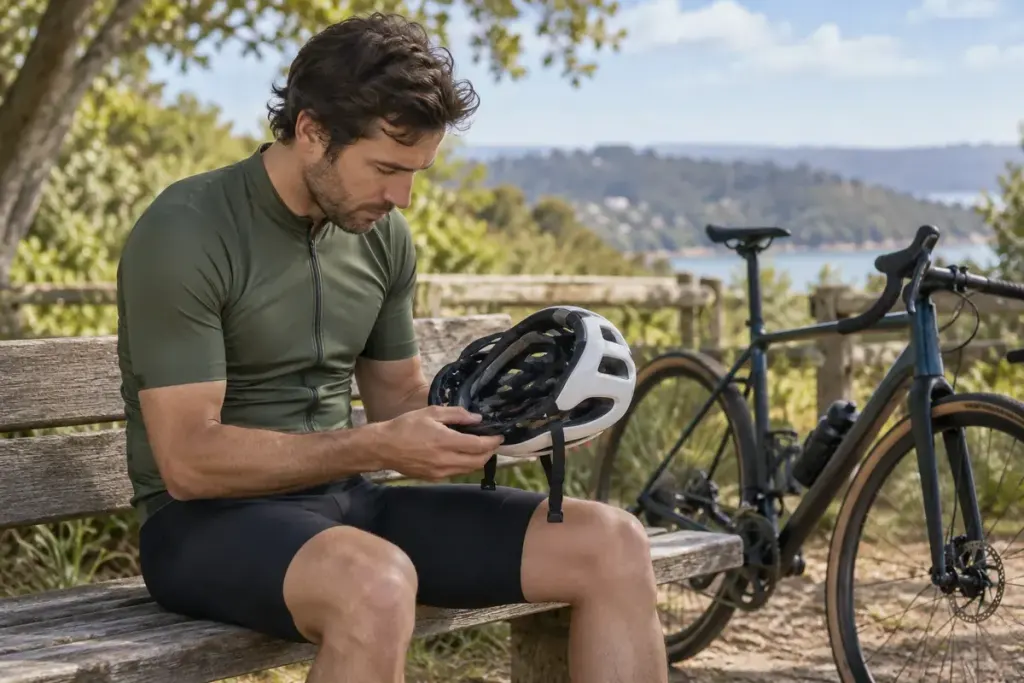
The bicycle looks rideable and the helmet shell has only a scuff. That visual check does not tell you whether the helmet can provide the same protection after an impact. Before the next ride, treat its status as unresolved.
The US Consumer Product Safety Commission’s bicycle helmet guidance advises replacement after impact and notes that damage may not be visible. A helmet’s outer appearance is therefore not a reliable pass-or-fail test for continued use.
Do not let it drift back into the kit bag
After an incident, put the helmet aside and tell anyone who might borrow it that it has been involved in an impact. Record the model and what happened so that you can follow the manufacturer’s instructions or contact the manufacturer with a clear question. Do not attempt to restore protective foam with glue, heat or a cosmetic repair.
This is separate from checking the rider. Seek appropriate medical assessment after a head injury or concerning symptoms; replacing equipment does not establish that a person is fit to resume riding.
Keep useful details from the replacement
When selecting a replacement, confirm that it is intended for the cycling activity and meets the applicable local requirements. Check the fit according to its instructions. A helmet bought for a different sport is not automatically an equivalent substitute.
- Keep the model information and instructions somewhere you can find them.
- Note the purchase date and the manufacturer’s replacement advice.
- Check straps, fittings and condition during normal use.
- Store it as directed, away from conditions the manufacturer warns against.
For a shared household, distinguish an out-of-use helmet clearly from one ready to wear. A well-intentioned person tidying the garage should not accidentally turn rejected safety equipment into a spare.
The decision should follow the helmet’s safety guidance, not the desire to finish a planned ride. If a suitable helmet is unavailable, change the plan rather than treating uncertainty as evidence that the old one is fine.