
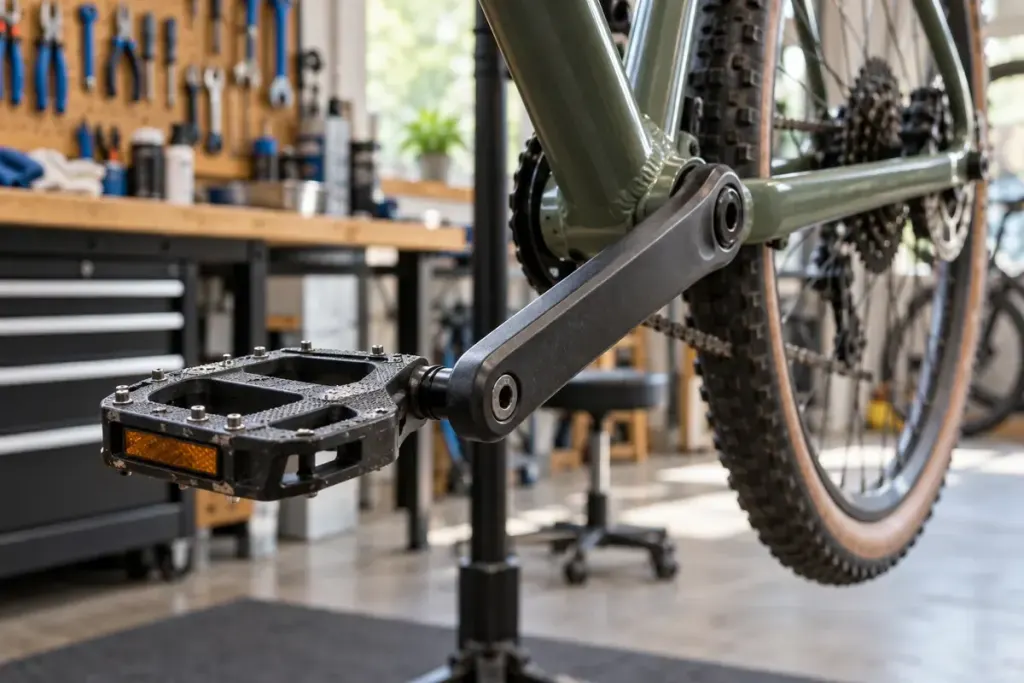
A pedal that will not loosen may be receiving force in the wrong direction. Bicycle pedals are handed: the ordinary right-hand pedal and the left-hand pedal do not share the same thread direction.
Park Tool’s pedal guide explains that the left pedal has a left-hand thread. Viewed from the outside of that crank, it installs counterclockwise and removes clockwise. The right pedal follows the usual clockwise-tightening direction.
Identify the side before reaching for more leverage
Left and right refer to the rider’s position on the bicycle. Find the pedal’s L or R marking and check the manufacturer’s instructions. The direction can feel confusing when a hex key is inserted from the inside of the crank, because you are looking from the opposite side.
Do not infer the thread from the way the pedal platform happens to rotate. The bearing movement and the threaded connection are different parts of the assembly.
Protect the crank’s threads
For installation, confirm compatibility and follow the specified preparation, lubricant and torque guidance. Begin the correctly matched pedal carefully by hand as directed. Resistance at the beginning is a reason to stop and inspect alignment, not to force the pedal into place with a longer tool.
For removal, support the bicycle securely and use the correct tool on the intended flats or socket. Be mindful of a hand suddenly moving toward the chainring if a tight pedal releases. A seized, damaged or uncertain connection is a good reason to use a bicycle workshop.
A useful maintenance note records the pedal model, the tool required and the relevant manual page. This is particularly helpful when several bicycles use different fittings. Knowing the direction is an important first step, but it does not replace the manufacturer’s complete procedure or a check that the finished installation is secure.