
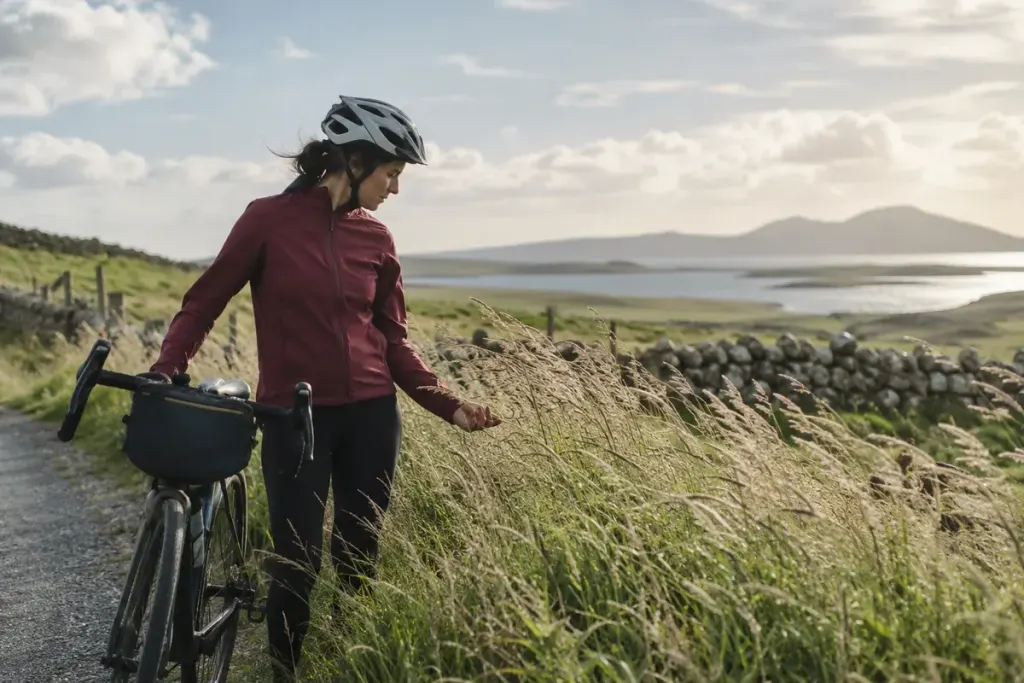
The first half of a ride feels unusually quick. At the turn, the same road becomes a long struggle. A tailwind can hide how much the return journey will ask of you, especially when your route has little shelter.
Read the route in both directions
Compare the forecast wind direction with the outward and return legs. Look for exposed bridges, open fields and sections where shelter suddenly ends. Gusts matter as well as average wind; a comfortable stretch behind buildings may not describe the conditions around the next corner.
Do not turn this into a universal wind-speed rule. Rider experience, bike, luggage, road width and gustiness all affect the decision. If conditions feel beyond your ability to hold a safe line, choose another route, shorten the ride or postpone it. Training value does not require completing the original map.
A practical planning example
For a circular ride, mark an earlier return option before leaving. Tell your riding partner when you will reassess, such as at the last sheltered village before an exposed section. Carry enough food, water and appropriate layers for the longer realistic duration, not only the optimistic one.
During the ride, judge effort separately from speed. A lower speed into the wind does not automatically mean poor fitness, and trying to recover an average can turn a manageable journey into an exhausting one. Leave room for other road users and avoid chasing a wheel or making abrupt movements when gusts arrive.
Afterwards, record where the route felt exposed and whether your return estimate was sensible. That local knowledge is more useful for the next windy day than one impressive average-speed figure from the sheltered half.