
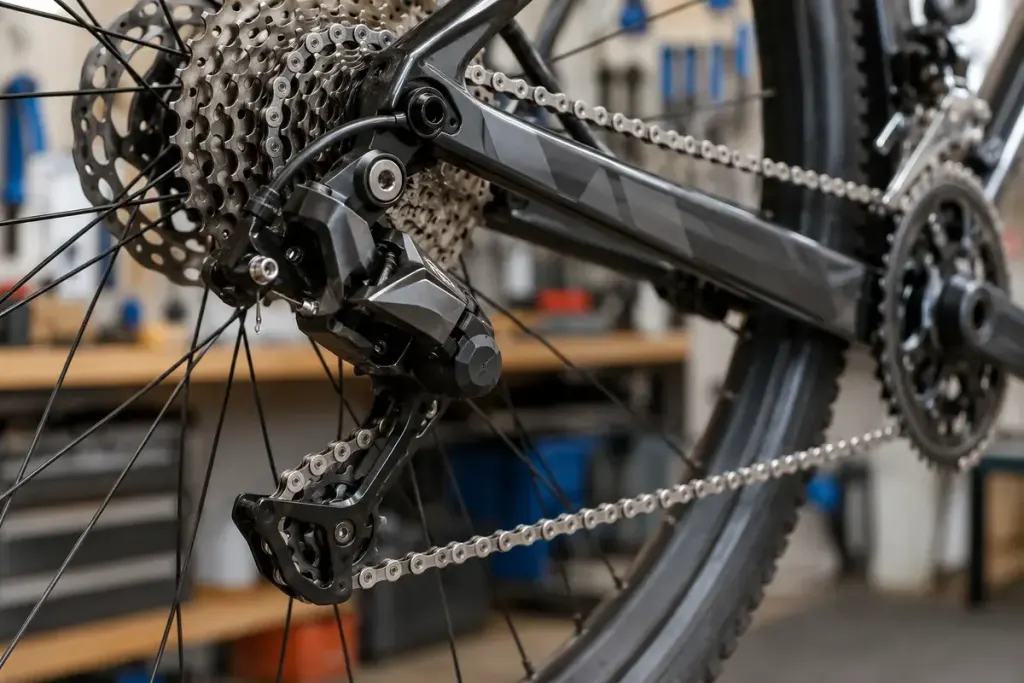
A small kick through the pedals every so often does not always mean the rear derailleur needs another turn of its adjuster. One chain link may be reluctant to articulate as it travels around the drivetrain. Changing several settings before looking at the chain can hide the original clue.
Look for repetition
With the bicycle securely supported, use a safe, unpowered inspection method appropriate to the bike. Keep fingers, clothing and tools away from moving chainrings and sprockets. On an e-bike, isolate assistance as the manufacturer directs; do not use motor power for this observation.
Turn the drivetrain slowly by hand and watch the chain as it passes around the derailleur pulleys. A stiff section may retain an unusual angle or hesitate while neighbouring links bend smoothly. BikeRide’s demonstration of a stiff chain link illustrates the symptom. Stop movement before examining any suspect section closely.
Notice whether the same section returns with each complete journey of the chain. This is different from assuming every skip comes from one cause. Wear, damage, adjustment and other faults can create their own symptoms.
Identify the connection before trying to fix it
A joining pin, a reusable link and a single-use connecting link do not share one repair procedure. Consult the exact chain manufacturer’s instructions or a qualified mechanic. Park Tool’s chain-tool instructions emphasise that connecting systems differ and model-specific guidance matters.
Do not force a link sideways indiscriminately, drive a pin out and back in on assumption, or add lubricant to conceal visibly damaged plates. If the chain is cracked, twisted or insecure, stop riding until it has been assessed and properly repaired or replaced.
When handing the bike over, describe what you observed: the repeating point, whether it began after chain work, and which movements revealed it. A short factual description is more helpful than arriving with several unrelated adjustments already changed. Once the fault is resolved, check the drivetrain operation before returning to normal riding.